“Eat the rainbow” is familiar advice for getting a variety of fruits and vegetables into our diets. But gardeners have an advantage: we can grow the rainbow, including colorful varieties of vegetables we rarely see at the grocery store.
A home garden can certainly produce red tomatoes, but why not try yellow, orange, or purple? Think beans are only green? Think again – try deep purple, red, and yellow. Peppers and carrots come in nearly every color, from the darkest purples to the palest yellows.
And those different colors aren’t just pretty—they’re packed with nutrients and naturally occurring plant compounds that contribute to a healthy diet.
Here’s the best part: You don’t need a huge garden to add more color to your plate. Many of these common vegetables can be grown easily in a raised bed, a small garden, or even in containers on your patio.
The Tomato Rainbow
Let’s start with the queen of the garden: the tomato. Nutritionally, tomatoes are high in vitamin C, potassium, folate, fiber, and other nutrients. They are also a major dietary source of lycopene, a carotenoid and antioxidant that helps protect cells from oxidative damage.
But tomatoes don’t have to be red. True purple or blue tomato varieties get their unusual coloring from anthocyanins—the same family of pigments responsible for the blue and purple coloring in foods such as blueberries. Other dark tomatoes may get their color from a combination of pigments, including lycopene and chlorophyll.
In fact, there is a new genetically modified tomato, the ‘Purple Tomato’, engineered using genes from snapdragons to produce unusually high levels of anthocyanins in the fruit.

The tomato rainbow also includes shades of pink, orange, yellow, green, and white, plus many striped and swirled variations—so many delicious choices to diversify your plate.
Growing Tip: If space is limited, choose compact or dwarf tomato varieties that are well suited to containers.
Carrots Didn’t Get the Orange Memo
Carrots haven’t always been predominantly orange. Early cultivated carrots included purple and yellow forms, with red and white varieties also developing over their long history. Orange carrots became increasingly common in Europe during the 16th and 17th centuries and eventually became the familiar standard we know today. However, those old heirloom carrot colors are back in style (apparently, carrots never agreed that orange was their official uniform).

All carrots are high in fiber and nutritionally dense, containing alpha- and beta-carotene, which the body converts into vitamin A.
Orange carrots have higher levels of beta-carotene; purple carrots are high in anthocyanins; yellow carrots contain other carotenoids, including lutein, which supports vision. Although white carrots lack the same pigments as the others, they’re still high in fiber and nutrients.
Growing Tip: Carrots need very little garden space and also grow well in deep containers. Plant several colors together for a surprisingly beautiful harvest.
Beans: Green Is a Type, Not a Requirement
Let’s face it, most people call snap beans “green” beans because that’s what we see in the grocery store. But snap beans can also be yellow, purple, red, mottled, or streaked. Here’s a fun fact: many purple beans turn green when cooked!
No matter the type, beans are an excellent source of fiber, folate, and other vitamins and minerals. Expand your horizons and grow a bean of a different color.
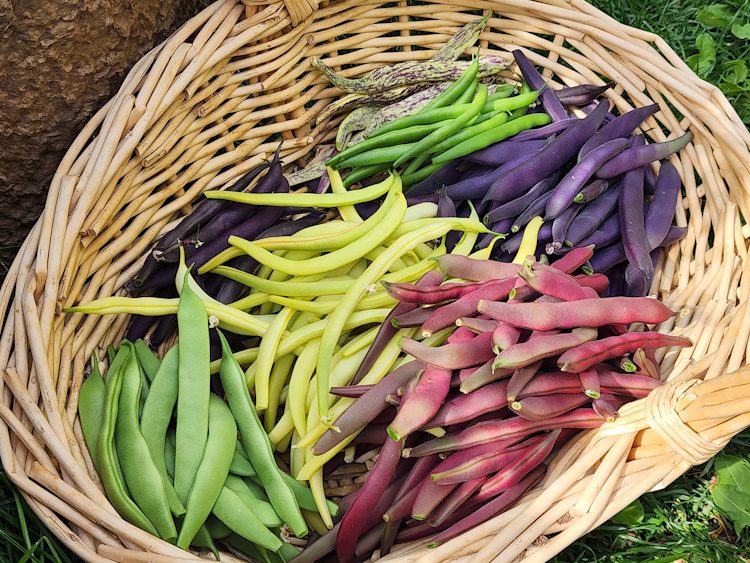
Growing Tip: Bush beans are easy to grow in small gardens and containers. Pole beans grow vertically, producing a substantial harvest in a small footprint.
Grow Your Own Greens
With lettuce and other greens making headlines for foodborne illness outbreaks, it makes sense to consider adding a few varieties to your garden. While growing your own doesn’t automatically eliminate food-safety risks, you have control over the soil and amendments, water, harvesting, washing, and handling from garden to plate.

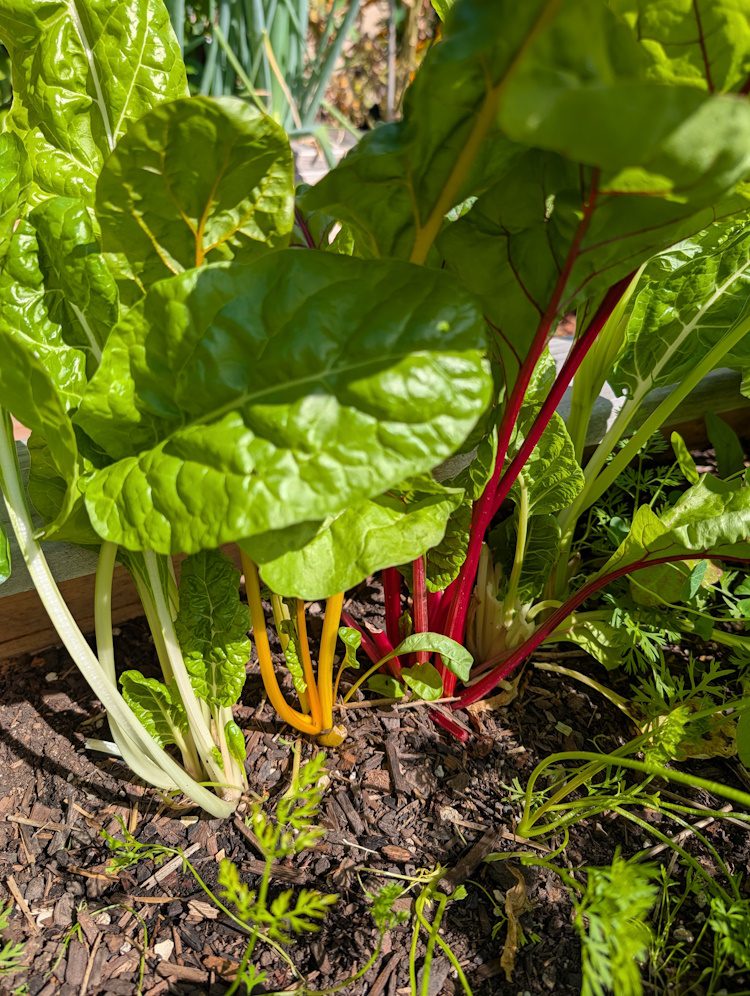

Lettuce, spinach, kale, chard, arugula, and other leafy greens are nutrient-dense foods that provide fiber and varying amounts of vitamins A, C, and K, folate, and minerals. Although we call them “greens,” you can find deep red lettuces, burgundy mustard greens, rainbow chard, red kale, and many more colorful varieties.
Growing Tip: Greens are among the easiest vegetables to grow in containers and can yield multiple harvests from a small space.
Peppers: Pick a Color
Did you know there’s no such thing as a “green” pepper variety? Most peppers sold or harvested green are simply unripe fruit. If left to mature, depending on the variety, they may turn red, yellow, orange, purple, brown, white, or even striped.

Peppers are an excellent source of vitamin C, carotenoids, and other plant compounds. As they ripen, their nutritional composition and flavor change—sweet peppers generally become sweeter, while the heat of hot peppers varies by variety and maturity stage.
Growing Tip: Peppers are natural container plants and can be surprisingly ornamental—edible landscaping without much effort.
Beyond the Familiar Rainbow
Vegetables of all kinds come in a variety of colors—the key here is variety. Different vegetables—and colors—bring different nutrients and plant compounds to the table.
When planning your garden (or shopping at the farmers market), look for these beauties:
- Eggplant: purple, lavender, pink, green, white, striped and even orange varieties.
- Cucumbers: green, white and yellow.
- Radishes: red, pink, purple, white, yellow and even black.
- Beets: deep red, golden, white and candy-striped Chioggia.
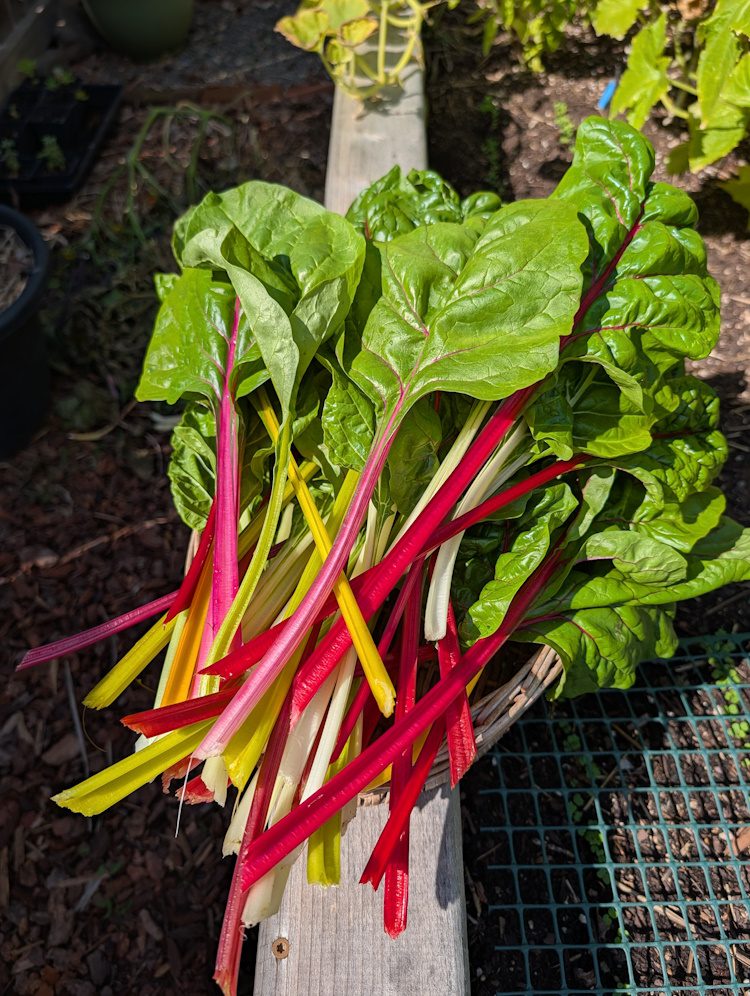
- Swiss chard: stems in red, pink, yellow, orange and white.
A plate with several colors of food is simply more inviting and appetizing.
You Don’t Need a Big Garden
Growing a rainbow of vegetables doesn’t require acreage. Even the smallest gardens or patios can accommodate a few containers with a dwarf tomato (many dwarfs produce full-size fruit), a pepper plant, successive plantings of lettuce, bush beans, carrots, or radishes—and, with a trellis, cucumbers.
Add a raised bed and the possibilities multiply.
Grow what you love to eat, but choose varieties and colors you can’t easily buy. Seed catalogs are especially good sources for unusual versions of familiar vegetables.
Color Outside the Produce Aisle
Eating a wider variety of vegetables doesn’t have to mean dramatically changing how you eat. It might simply mean changing what you plant. Grow a purple carrot instead of an orange one. Choose a yellow cucumber over green. Plant a nearly black tomato. Add red lettuce to the salad bowl.
The healthiest garden may also be the most colorful—and fortunately, Mother Nature has a much bigger box of crayons than the grocery store.




Leave a Reply