Growing a garden is an excellent way to lower food costs. But buying seeds and plants can also add up. A simple (and fun) way to cut expenses is to save seeds from your own garden. Not only does this increase self-sufficiency, but it also builds resilience and helps you preserve the varieties you cherish.

Although seed saving is straightforward, it requires some planning at the start of the season. Without proper planning, spacing, and a basic understanding of pollination, you could end up with a tangle of vines, mystery tomatoes, and crossed squash—not the worst outcomes, but definitely not ideal for seed saving.
The Mindset: Be Selective
Saving seed is a selective process—you don’t need to save seed from every plant in your garden. Monitoring blossom times, tagging and labeling plants, and ensuring proper spacing are manageable tasks for a few plants, but not for the entire garden.
I recommend starting small—three to five crops at most, or even just one if this is your first year. Focus on vegetables you grow every season and those that perform well in your garden.
Before deciding what to save, it’s essential to identify if the variety is open-pollinated or an heirloom. These varieties produce true-to-type seed, meaning plants grown from saved seed will resemble the original. In contrast, hybrids (F1) do not produce true seed.
Being selective might seem obvious, but it’s essential to your success.
Understanding Pollination (Without a Biology Degree)
Successful seed saving begins with understanding how plants reproduce through pollination. There are two primary methods: cross-pollination, carried out by insects, wind, or humans, transferring pollen between different plant species.
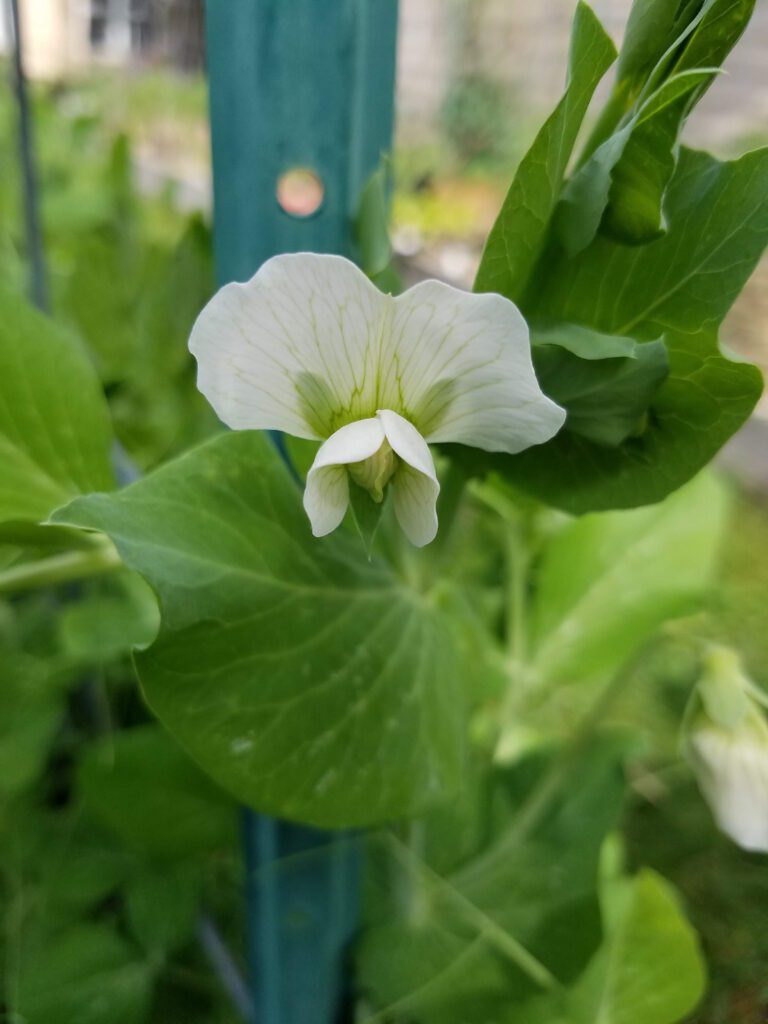
Then there is self-pollination, where plants self-fertilize—no external help is needed—they do it on their own. “Selfers,” as they’re known, have perfect flowers—each blossom contains both male and female parts.
In these plants, pollination often occurs before the flower opens, significantly reducing the risk of cross-pollination by insects or other means. And that nearly guarantees true seed, which, as seed savers, is precisely what we want.
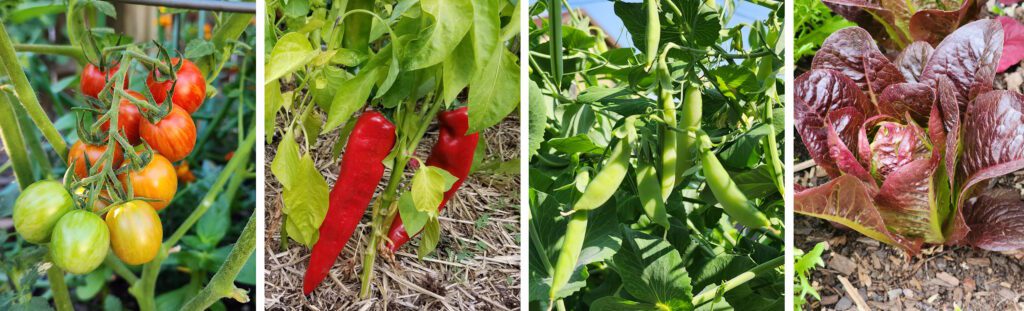
Popular garden vegetables like tomatoes, peppers, beans, peas, and lettuce are self-pollinating and easy to harvest and process, with high success rates in seed saving. Start with those!
Low Risk, Not No Risk
We could skip straight to garden planning, but I’d be remiss if I didn’t explain how unwanted cross-pollination affects seed-saving. A little more biology here, but bear with me.
When cross-pollination occurs between two compatible species, even if they are self-pollinating, the resulting seed will not be true-to-type.
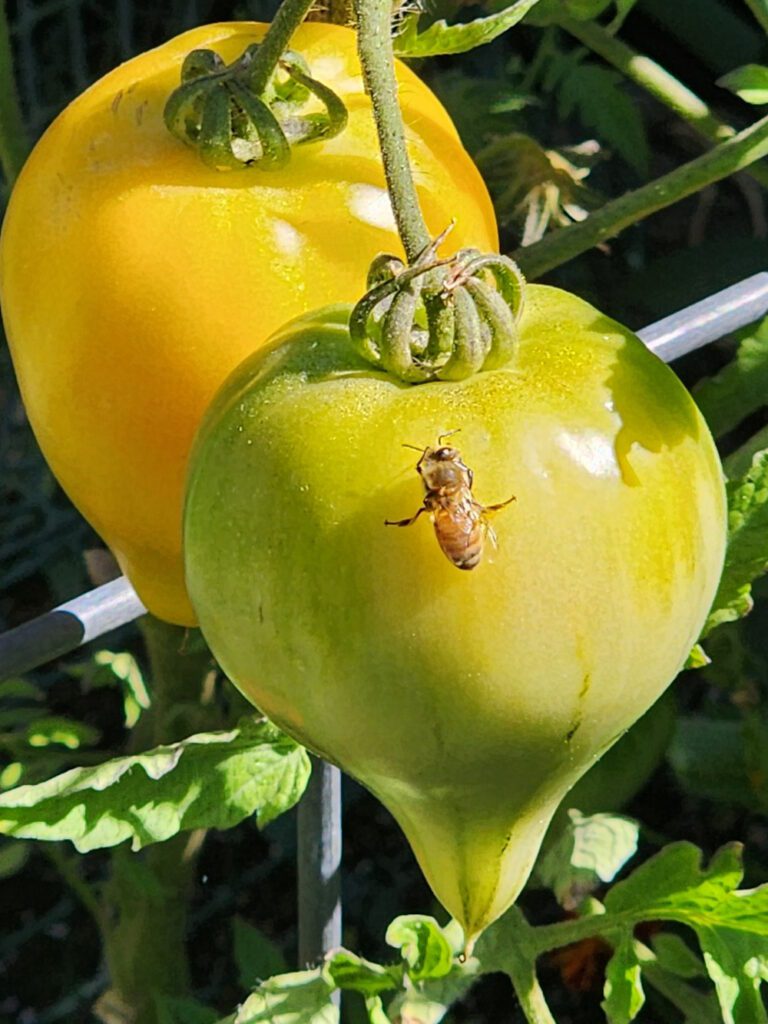
For example, two types of tomatoes grow side by side: a large, red beefsteak and a small, yellow cherry. Although both are self-pollinating, cross-pollination could still occur (busy bees!).
Keep in mind, cross-pollination doesn’t affect the fruit that will be forming – you’ll still harvest red beefsteaks and yellow cherry tomatoes in August.
However, the seeds inside those tomatoes could contain DNA from the other tomato, resulting in fruit that’s not like either parent—a cross between the two.
Is this disastrous for home garden seed saving? Not at all. In fact, it’s often how new varieties are discovered. However, if you want “true” seed, you need to manage the risk of cross-pollination, even with self-pollinating plants. That’s where planning for seed-saving comes in.
Plan with Saving in Mind
Once we have our varieties selected, it’s time to decide where to plant them in the garden. We’ll arrange this to ensure true seed production while keeping the process simple and stress-free.
And… the best way to do that is to grow only one variety of each seed-saving crop.
“Oh, hello, what?” says the gardener with 42 tomato plants penciled into her plan. Trust me, I know it’s nearly impossible to grow just one of anything, let alone tomatoes. However, this effectively eliminates cross-pollination.
But if growing only one type isn’t feasible, isolation distances are a must. Fortunately, most of the selfers on our list—tomatoes, beans, peas, and lettuce—only require 10 to 20 feet between varieties to avoid cross-pollination (another reason these are seed-saving stars). Peppers, however, require over 100 feet, so planting just one variety is best for true seed.
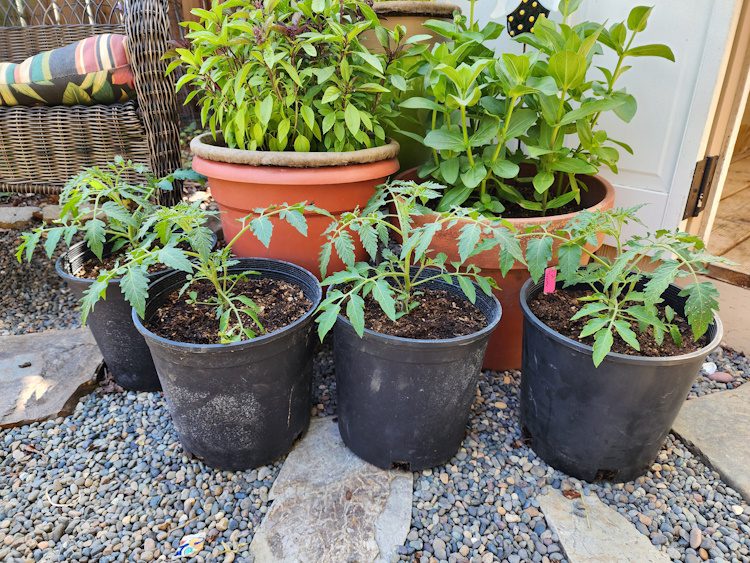
Create isolation by setting aside a section of your garden for seed-saving, separate from your other crops. Alternatively, grow seed-saving crops in pots or containers, keeping them separate from your main crops.
Another effective method to prevent cross-pollination is to use “blossom bags.” These organza fabric jewelry bags, available in craft stores, are also perfect for protecting blossoms from pollinators. Place the bag over the flower stem and leave it until the baby fruit appears. Remove and tag the stem with a string, so you’ll know that the fruit has “true seed.”
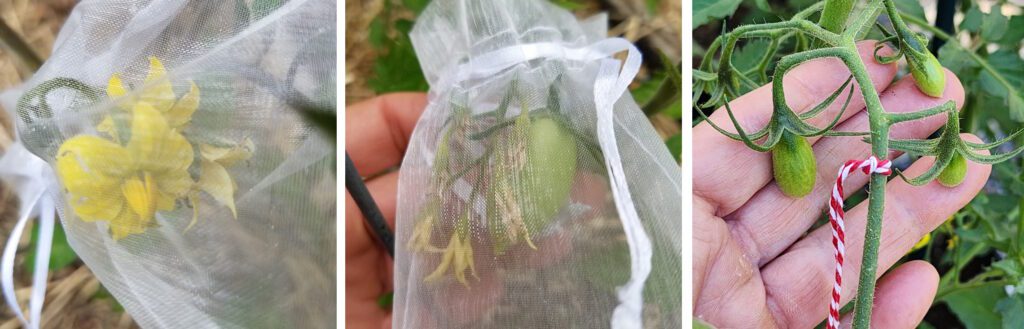
This is all easily managed, but here’s a reality check: backyard seed saving is about reasonable control, not perfection. Do your best and enjoy the process!
Label Like Your Future Self Depends on It (Because It Does)
While you can be a little flexible with plant spacing, there’s no margin for error when labeling. Saving seed from plants with unknown identity or uncertain origin is pointless, and you don’t need another mystery tomato.
This is a must-do task at planting time, not at harvest when your memory of May is mush.
Use high-quality plant stakes, labels, or tags—ones that can endure intense sunlight—and a water- and UV-resistant marker to write the variety name, planting date, and seed-saving designation.
Next, grab a pencil and sketch a map of your garden layout. Mark the locations of the plants in the seed garden (also helpful for your main garden). If plant tags get lost during the season, this is a lifesaver.
Harvesting and Storing Seeds
Patience is essential for collecting viable seed, since the fruit must be fully mature. This also means fruit can sometimes be well past the “good eats” stage.
Tomatoes should be fully ripe and soft; bean and pea pods should be leathery and dry on the vine; lettuce needs to bolt and flower (finally, it’s okay to bolt!); peppers should be ripened to their intended color, not green, as green pepper seeds are immature.
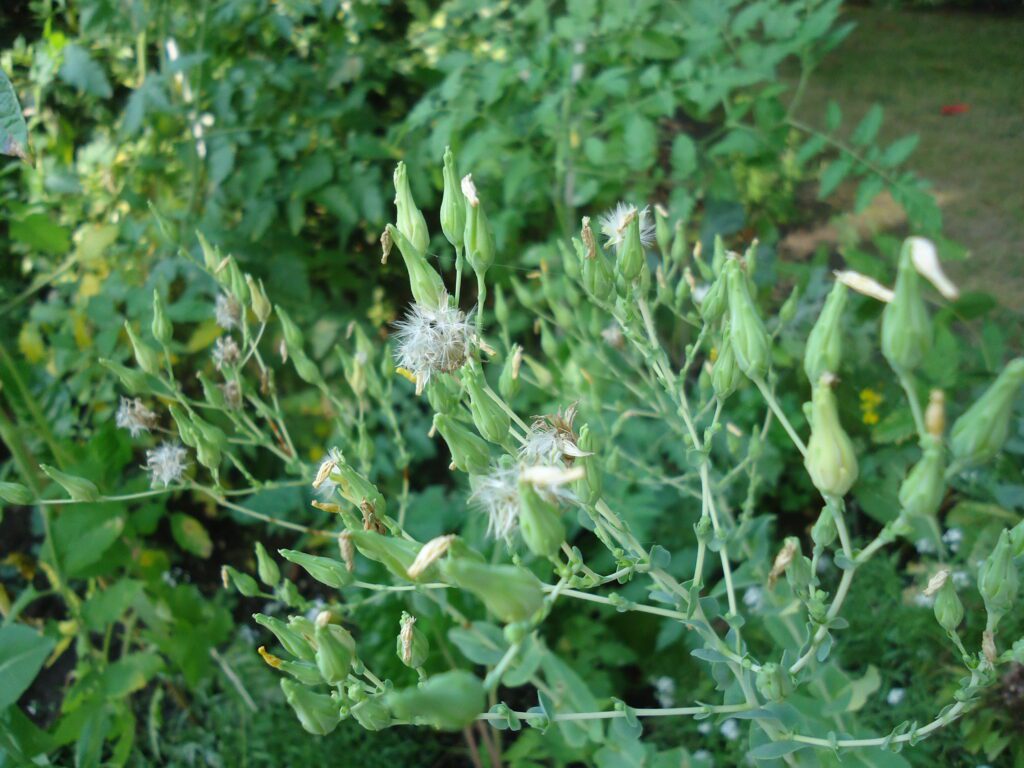
When dried and stored properly, most garden seeds last at least two years. Clean the seeds and dry them in a well-ventilated, sunlight-free area for a few days to a week. Store in paper envelopes or jars labeled with the name and harvest date in a cool, dry, dark place.
Your Future Garden Awaits
Seed saving is less about perfection and more about intention. It’s a way to extend your garden’s abundance, build resilience, and deepen your connection to the plants you grow.
Start small, choose reliable crops, and don’t stress over absolute control (it’s impossible). Should a bit of cross-pollination sneak in, well, you just may stumble upon something extraordinary.



Leave a Reply