Every July, my inbox fills with messages from worried gardeners: “My blossoms are falling!” “My tomato cracked!” “Why is it still green?” “What is this black spot?”
Most of the time, nothing is actually wrong.
Tomatoes are the prima donnas of the vegetable garden, wearing their stress on the outside and reacting dramatically to weather, watering, and other environmental conditions. Thankfully, most midsummer tomato “problems” aren’t caused by diseases or insects at all—they’re simply the plant responding to its environment.
| If You See: | It Probably Means: |
| Blossoms falling | Heat or cold during pollination |
| Black bottom | Blossom end rot |
| Zipper scar | Cool weather during pollination |
| Deep folds | Catfacing |
| Split fruit | Uneven moisture |
| Fruit won’t ripen | Excessive heat |
Based on your questions, let’s take a closer look at the most common tomato conditions you’re likely to see this time of year.
Why Are My Tomato Blossoms Falling Off?
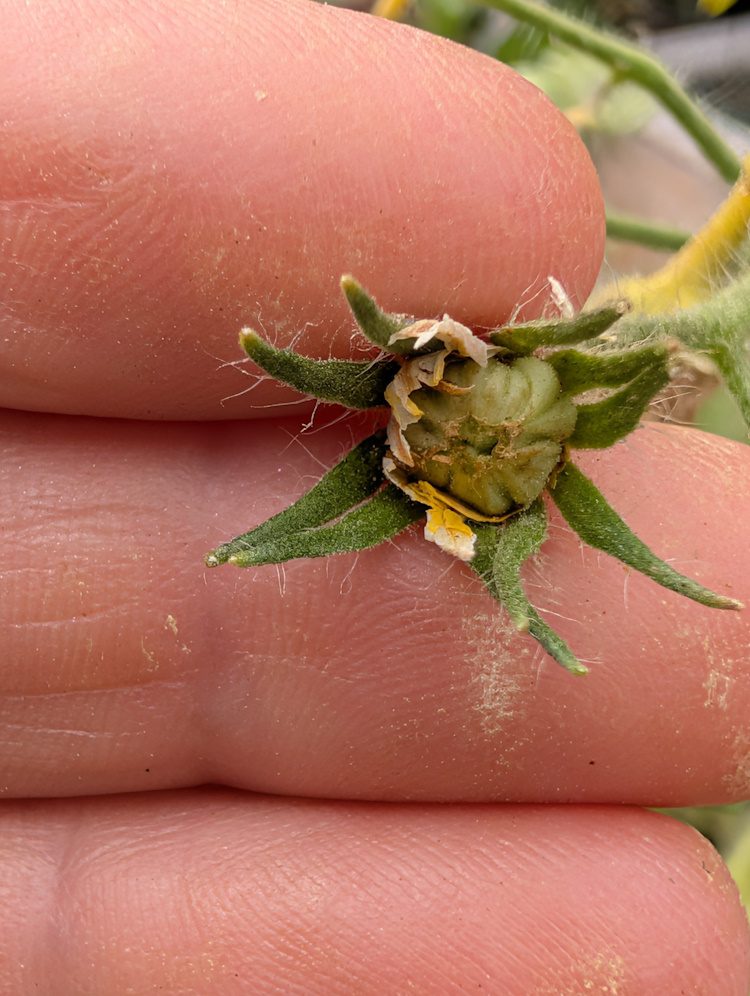
Blossom drop is one of those conditions that freaks out many gardeners. Why, why, why are those flowers falling off the plant? It can be heartbreaking to see, knowing each one was a potential tomato, but let me assure you, you’ve done nothing wrong.
And, thankfully, more will come.
Tomatoes are self-pollinating, meaning each blossom contains both male and female reproductive parts. Yet pollination can still fail when temperatures fall outside the ideal range of 70°F to 85°F. When that happens, blossoms dry up and fall from the plant.
I know it’s hard to watch blossoms fall to the ground, but don’t panic; your healthy tomato plants will continue to flower and set fruit once temperatures stabilize.


Why Is My Tomato Black on the Bottom?
One of the most misunderstood conditions in the garden is blossom end rot (BER). It’s a common physiological disorder—not a disease (it won’t spread to other plants)—that affects tomatoes, peppers, eggplant, squash, and pumpkins.
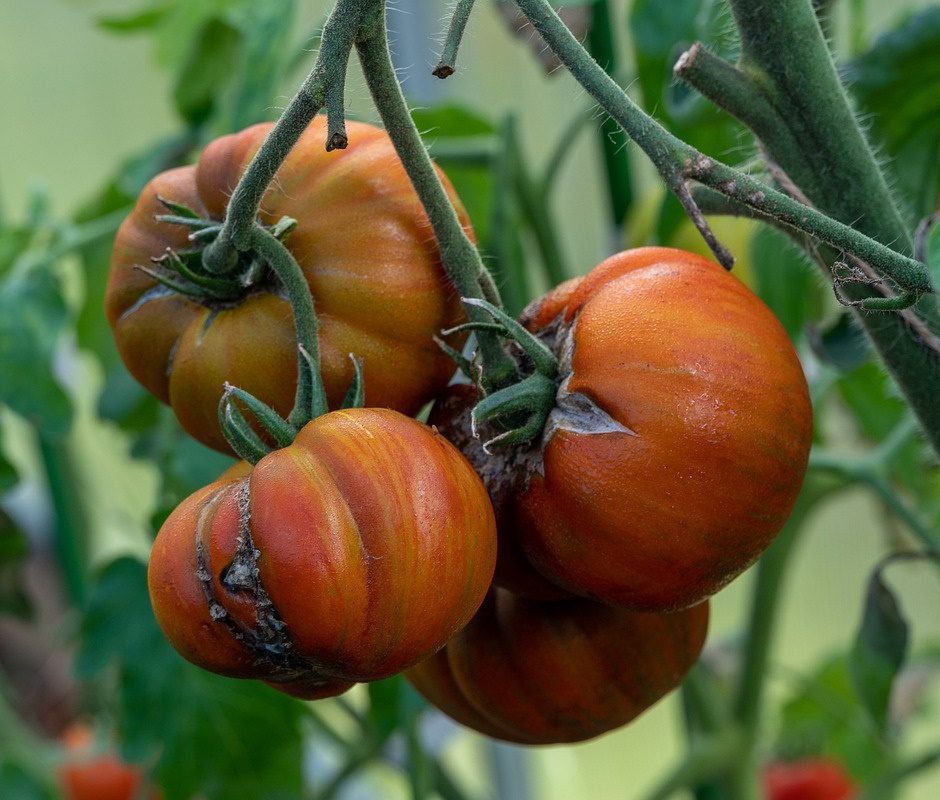
BER in tomatoes appears as a dark brown to black, leathery patch on the blossom end of the fruit and results from the plant’s inability to absorb or transport calcium, leading to a calcium deficiency in the developing fruit.
Blossom end rot isn’t caused by a lack of calcium in the soil—it’s caused by the plant’s inability to transport calcium to developing fruit. Heat, cold, inconsistent watering, and root damage can all interfere with that process.


Some tomato varieties, such as determinate paste tomatoes, are prone to BER. The condition also often occurs in container-grown plants that are overwatered and over-fertilized.
Contrary to what the internet says, adding eggshells or TUMS tablets to the planting hole or spraying the plant with calcium will not prevent BER. Skip these remedies; what your tomatoes need is consistent watering, not more calcium.
Why Are My Tomatoes So Ugly?
An ugly tomato? No such thing to my eyes.
However, our cool spring weather can disrupt pollination and fruit set, resulting in, shall we say, less-than-ideal fruit.
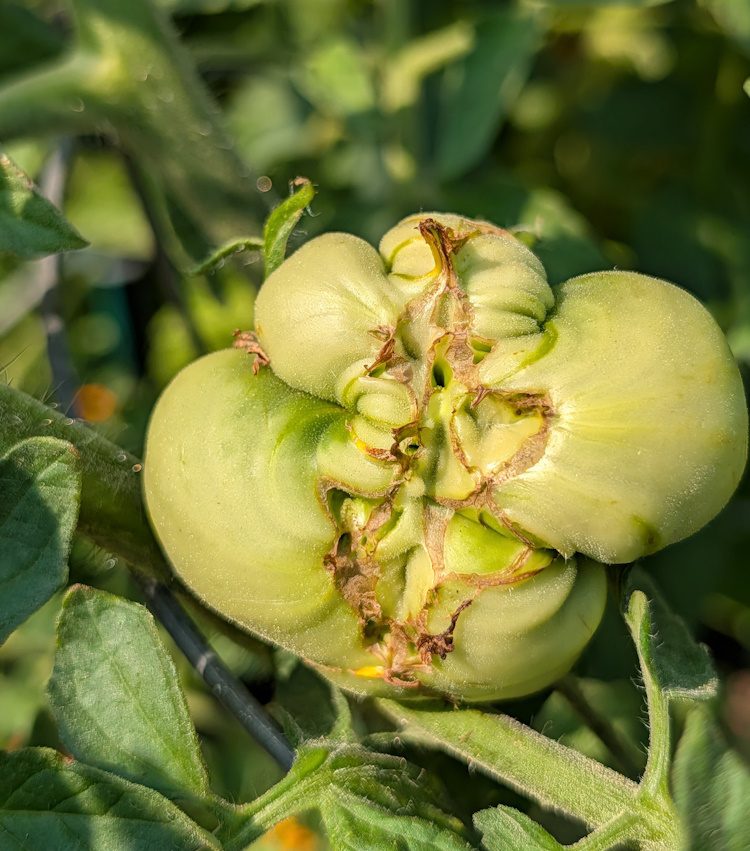
Sometimes several blossoms will fuse into a single oversized flower, known as a megabloom. The resulting tomato may be giant, misshapen, deeply creased, or puckered—a condition called catfacing.

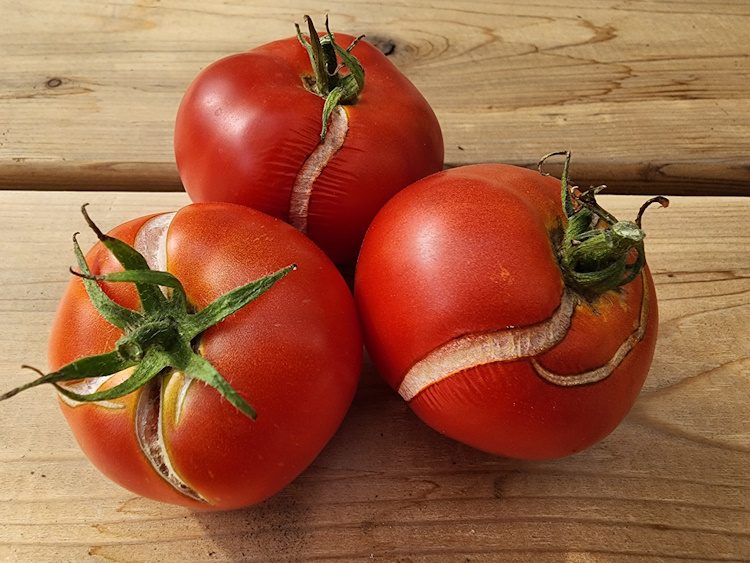
Another cosmetic oddity that occurs during pollination is zippering. This happens when part of the blossom sticks to the developing fruit, leaving a zigzag scar as the fruit grows. It looks Frankenstein-like and a bit creepy, but it doesn’t affect flavor or safety.
Why Won’t My Tomatoes Ripen?
I feel your pain. You’ve been watching your beefsteak grow; it’s showing signs of ripening, and then it suddenly stops. It seems stuck in a pale yellow stage. What gives?
Heat.
Tomatoes ripen best between 68°F and 77°F. Once temperatures consistently climb above 85°F, pigment production that creates color slows dramatically. The further the temperature deviates from that optimum, the slower the process will be. Fruit may remain green or pale yellow, or stay at the breaker stage, until temperatures moderate.

Summer temperatures usually reach this threshold, so it’s best to harvest tomatoes at the breaker stage—when the first blush of color appears—and beat the heat. At this stage, tomatoes are fully mature and will ripen off the vine.
Why Did My Tomato Split?
It’s the splits when you discover that half the ripe fruit on your cherry tomato plant has burst open. Tomatoes crack, split, or even burst on the vine when the fruit absorbs water faster than its skin can expand.
This generally happens to ripening fruit after heavy rainfall following dry weather—think late-summer rains.
Adding mulch helps maintain even soil moisture, and harvesting tomatoes at the breaker stage reduces cracking caused by heavy rains—and may beat the birds and squirrels to the prize.


Trust me, tomatoes ripen just as well on the kitchen counter as on the vine, and the fruit tastes just as good.
When Should I Actually Worry?
Most of the conditions we’ve discussed are physiological—responses to weather or growing conditions—rather than diseases.
Disease is different. It spreads, often affects multiple plants, and usually worsens over time. Look for fuzzy mold, expanding leaf spots, stem lesions, or widespread yellowing. Insects leave their own clues: chewed leaves, holes, frass, or the insects themselves.

If a once-healthy tomato plant (or any plant in your garden) suddenly declines and you’re unsure why, take clear photos or a sample to your local Extension office or Master Gardeners. It’s a free resource, and they’ll help identify the problem before you waste time—or money—treating the wrong thing.
Tomatoes Are Dramatic
Tomatoes aren’t fragile—they’re just wonderfully dramatic. They spend the summer reacting to every change in the weather.
Fortunately, most of those scars, cracks, and odd shapes are simply reminders that gardening is as much about the weather as it is about the gardener. Learn to recognize these common conditions, and you’ll spend less time worrying—and more time enjoying one of summer’s greatest rewards.

Related Posts
How to Prevent and Manage Blossom End Rot in Your Garden
Fire and Ice: How Extreme Temperatures Impact Your Tomato Plants
It’s the Splits! How to Prevent Tomato Cracking and Splitting





Leave a Reply