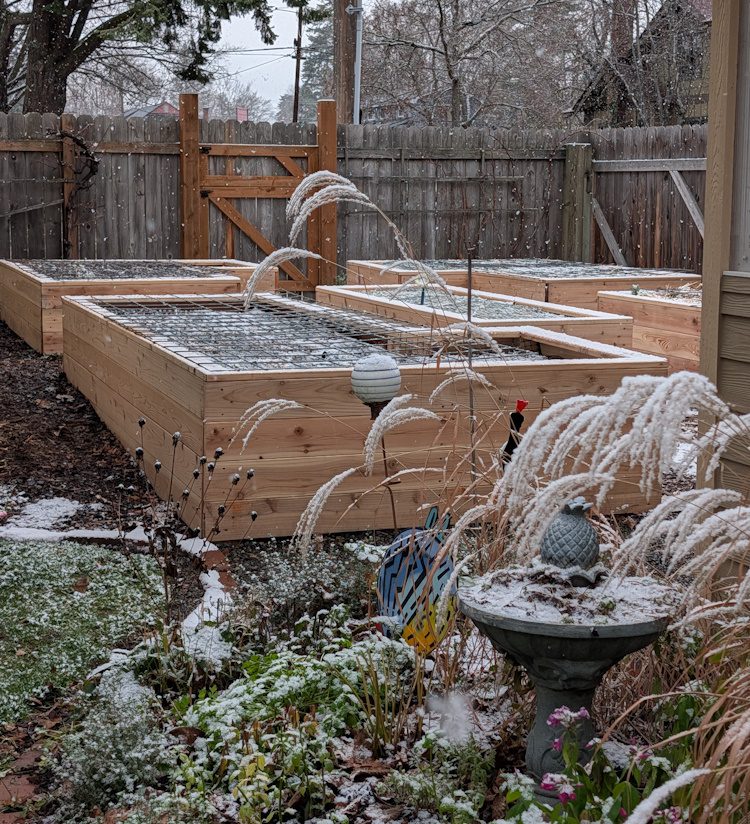
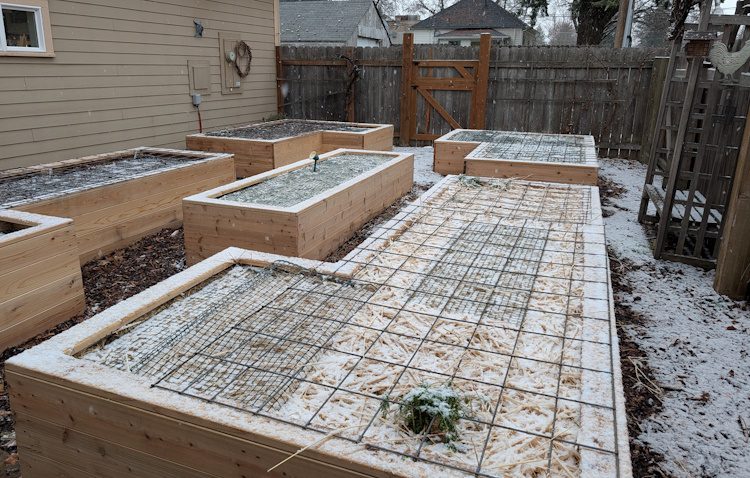
Finally, I can take a break from the garden. If you follow me on social media, you know I’ve been busy this fall installing new raised beds and hauling in soil. I just finished preparing the last raised bed for winter during Thanksgiving week, after the year’s final carrot harvest.

With the garden beds protected under a layer of leaves and straw, it’s my turn to sit down, reflect on the past season, and start some pre-planning for spring. While I write notes about the garden throughout the season, I’m taking time to do a deep-dive garden review of the good and the not-so-good to help me get a strong start next spring.
I encourage you to do the same. Keeping a garden journal allows you to spot patterns, track failures, surprises, and, best of all, record the wins!
Tools & Formats That Actually Work
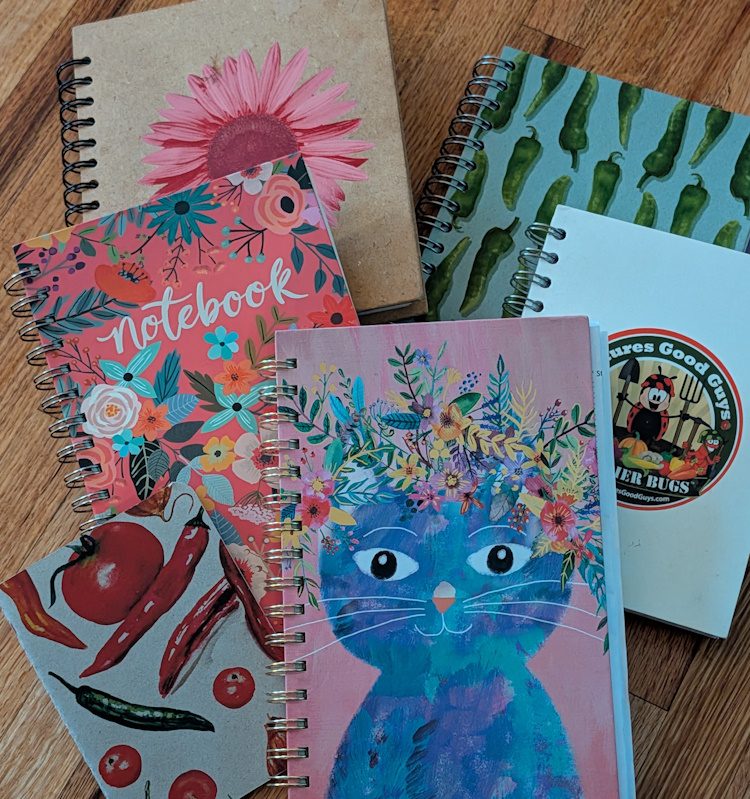
I’ve been an old-school garden journaler for years, as demonstrated by the stacks of wire-bound notebooks in my office. But lately, I’ve adopted a more modern way to record my garden observations. You’re probably familiar with it—that small computer we carry in our pockets called a smartphone!

Sure, I still make the occasional phone call with it, but in the garden, I use my phone to journal—using a notes app, voice recordings, and, of course, lots of photographs. It’s much quicker and easier when you’re “in the moment” in the garden.
What really matters, however, is finding a way to journal that you can stay consistent with and turn into a habit, whether it’s pen and paper, your phone, or an online service.
A few ways to journal include the classic bound journal, spreadsheets and calendars, digital apps like Keep Notes, voice recording notes (which works great when you’re prone to talking to your plants!), and online garden planning apps, such as GrowVeg.com.
I encourage you to try one or several. I use all of these for different purposes to track the happenings in my garden.
Now, about that habit… My journal has saved me on many occasions when I was trying to remember a “how did I…” or “what did I…” question about the garden. Unfortunately, there have been times when I’ve slacked off and honestly disappointed myself by not keeping better notes.
So, make it a habit. Set aside a few minutes each week to review the garden. Making it a pleasant task with your favorite beverage helps!
If sitting and writing isn’t your deal, use an app on your phone. On the go, it’s a quick way to jot down notes and observations. Journaling doesn’t have to be perfect – a few notes are much better than none at all.
A Season Rewind: What to Record from the Past Season
The saying “you can’t know where you’re going if you don’t know where you’ve been” is key in garden planning. The best time to reflect on the garden season is right after it ends. The longer you wait, the more those details fade away…
Need a jump start? These questions can set a framework for assessing the past season, along with a few regular topics to include:
- What triumphs did you achieve, and why? Identifying a “why” can help make successes repeatable.
- What challenges did you face? Some challenges are controllable (such as time), and others (such as the weather) are not. Understanding challenges helps you be better prepared.
- What was a failure and why? Don’t fret over this. Every gardener who has ever picked up a trowel has had failures. These are the BEST learning opportunities, especially when you can identify the reasons.
Things I always note in my journal include weather conditions, the presence of pests or diseases, how I managed them, and, of course, which plant varieties performed well or flopped (both figuratively and literally).

I never venture into the garden without my phone to capture photos – from stunning blooms to stubborn pests, I want to record it all.
Fast Forward: Journaling for the Future
After reviewing the information, use it to plan and set goals for the upcoming season. This early-stage planning is your chance to dream a little and capture it for future use.
What new or creative ideas do you have for your garden? These don’t need to be significant changes, unless that’s in order. Maybe you dream of a cut flower bed filled with zinnias or want to try growing a new vegetable—it’s your garden desires.
Make a list; it helps turn ideas into reality. I organize my plans into must-dos, would-like-to-do items, and a wish list. It took 10 years for “build a greenhouse” to move from wish list to must-do, but I never gave up and kept it on my list year after year (now, if only “a pony” would materialize).

Here are a few forward-thinking points for planning and goal setting:
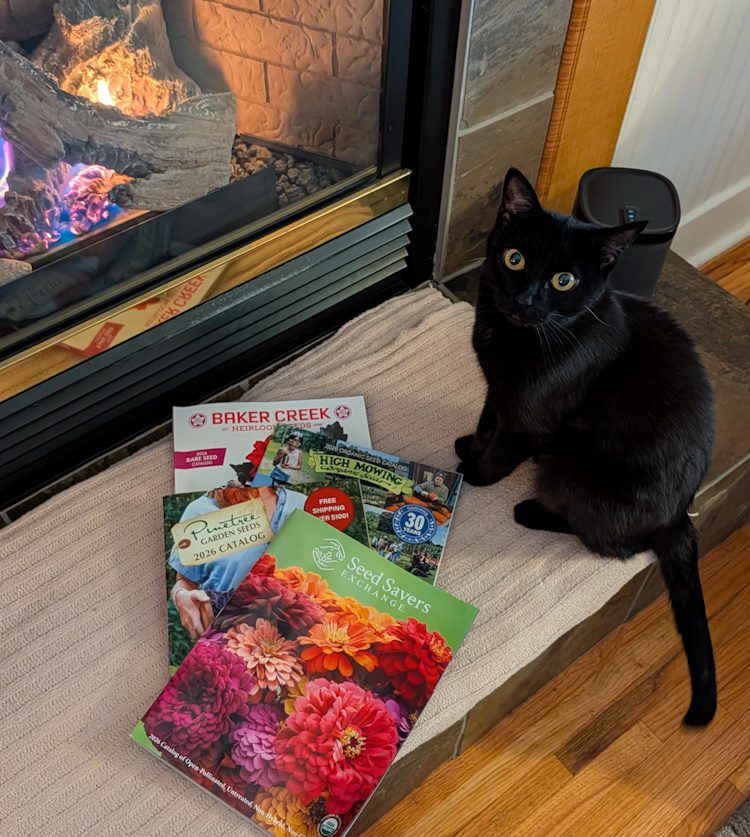
- What do you want to grow? Browse seed catalogs, research new plant varieties, and make lists. Remember, some popular seeds may sell out before spring; the early bird gets the worm!
- Map out your garden beds for next year to organize space and prevent planting the same vegetables in the same spot. Switching up the planting plan keeps things healthier.
- If you’re starting from seed, create a seed starting calendar to set proper dates for sowing. Check the seed packet and count back from your average last frost date. You might be surprised to learn that some flowers and vegetables should be started as early as January or as late as April.
- Can you grow more efficiently? If space is limited, consider using containers or growing vertically. Succession planting and interplanting are two great methods to produce more, no matter the size of your garden.
- What needs updating or fixing? Simple tasks such as soil testing, adding amendments, or repairing tools can significantly affect the garden in spring.
A Little Nudge
As winter settles in and the garden takes its well-earned rest, allow yourself to do the same. A bit of pre-planning now—notes scribbled, typed, or spoken into your phone—becomes your roadmap for next season, saving time, money, and frustrations.
Remember, a garden journal doesn’t have to be fancy; it just has to be yours. Start where you are, keep it simple, and let your reflections and plans guide you into your best season yet!




Leave a Reply