It’s the sound of the season: the constant whir of the ubiquitous leaf blower. Homeowners everywhere are busy blowing heaps of garden gold into the streets. Soon, the sound of rumbling front loaders and dump trucks will dominate as they haul away curbside piles of fallen leaves.
Garden gold, you say? Yes! As gardeners, we spend hundreds of dollars each year on compost, soil amendments, and mulch to keep our gardens healthy and thriving. Yet every fall, we discard one of the best, free ingredients for making these materials.
Dried deciduous tree leaves provide valuable benefits for your garden, from enriching the soil to providing habitat for beneficial insects. And if you’re leafless but overflowing with pine needles, no worries—the same applies.

Let’s explore a few ways to save money and harness nature’s bounty for mulch, leaf mold, composting, and supporting our pollinators and beneficial insects.
Why Leaves Are Garden Gold
Walk through a forest and feel the springy cushion of the forest floor beneath your feet. That’s years of fallen debris—from leaves, needles, and twigs to decomposing logs—all creating a rich, living soil.
Shouldn’t we embrace that idea in our landscapes? Mother Nature has been recycling leaves for millions of years—no plastic bags, rakes, or blowers needed.
Decomposing leaves (and needles) in your landscape can imitate a forest ecosystem. They naturally condition and enrich soil, supplying nutrients such as nitrogen, phosphorus, potassium, and trace minerals. In fact, up to 80% of all nutrients that trees absorb from the ground end up in their leaves, and they contain twice the mineral content of manure.
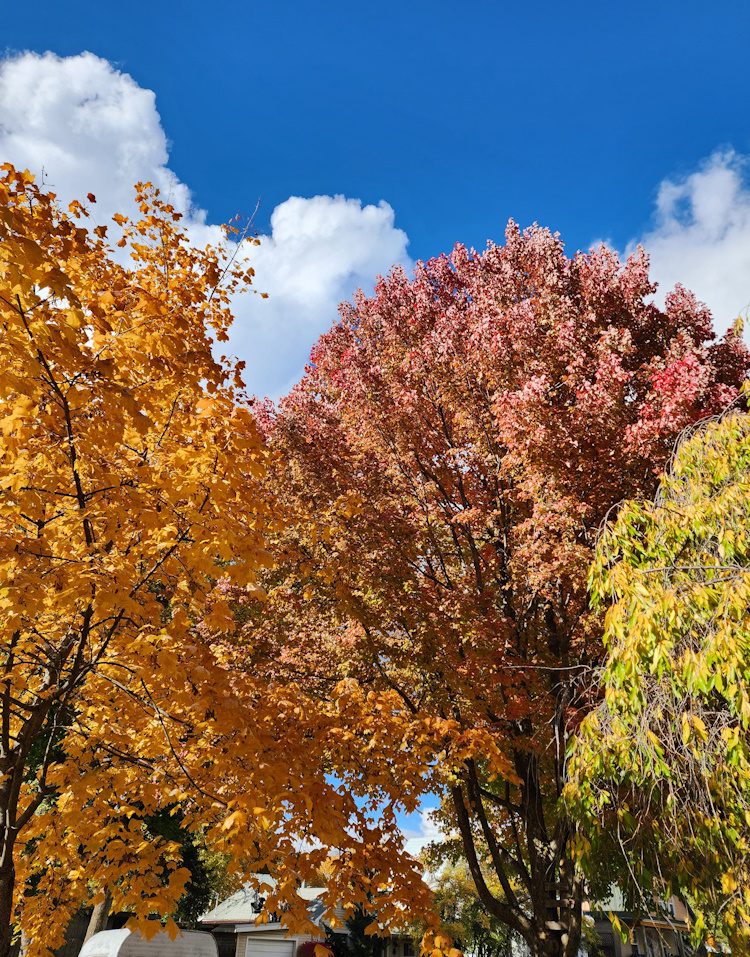
Mulch Magic – How to Use Leaves as Mulch
There is no better (or cheaper) mulch than dried leaves gathered from your yard. Leaf mulch effectively suppresses weeds, retains soil moisture, protects roots and bulbs from frost, and most importantly, adds organic matter to the soil as it decomposes.
For best results, shred leaves with a mower or leaf shredder first. Smaller pieces break down more easily and gradually integrate into the soil over the winter. Large, intact leaves tend to mat together, take much longer to decompose, and create a water-resistant layer on the soil surface.

Nearly any deciduous leaf can be used for mulch; the leaves of maple, birch, and fruit trees decompose best. Oak and sycamore leaves, which tend to be more “waxy,” break down more slowly.
One major exception is leaves from the black walnut tree. These leaves contain a natural toxin called juglone, which can stunt, harm, or even kill garden plants. The leaves of the English walnut also contain juglone, but at a much lower concentration. This makes them more suitable for leaf mold or compost, where the toxins can break down over time.
Also, avoid using chemically-treated or diseased leaves. Powdery mildew has been problematic on many maple trees this year, including my own. After extensive research, it’s unclear whether leaves with powdery mildew are safe to use as mulch in the vegetable garden. However, you should definitely remove them from around your maple trees, as the spores can overwinter and reinfect your trees in the spring.

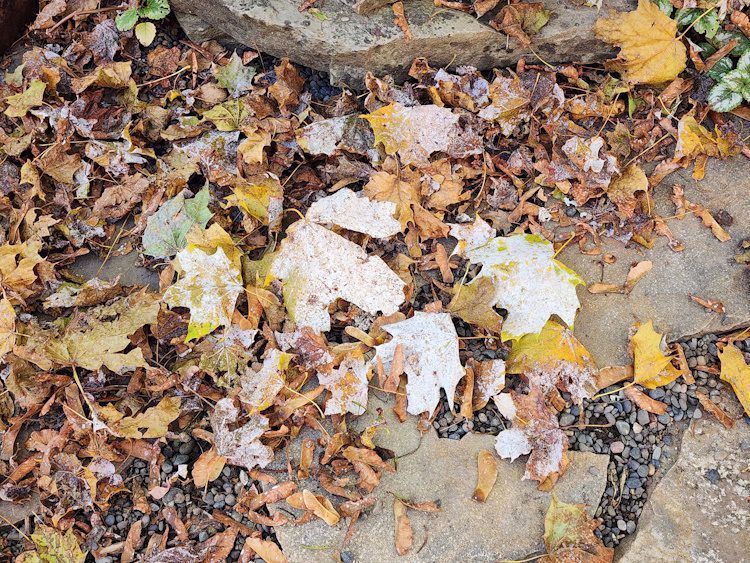
Applying a 3 to 4-inch layer of shredded leaves will protect perennials, shrubs, and vegetable beds through the winter. For beds planted with fall garlic, add up to 6 inches of mulch to protect the bulbs from frost.
Although pine needles decompose more slowly, they can still be used as mulch. Like leaves, shredding or chopping the needles will help them break down quicker. And, no, they won’t make your soil more acidic.
To prevent leaf mulch from blowing off raised beds, lay a piece of mesh garden fencing on top and secure it with garden staples. This also keeps critters from digging in your beds during winter.

Make Leaf Mold: Black Gold for Your Soil
So, you managed to cover your landscape with leaf mulch, but you still have more leaves to deal with—what’s next? Make leaf mold! Okay, it might sound gross, but this really is black gold for your garden soil.
Leaf mold is simply decomposed leaves that have transformed into a dark, crumbly, earthy soil conditioner similar to compost. While it lacks the nutrient value of compost, it can significantly improve soil structure, aeration, and water retention.


It’s an excellent (and free!) amendment for clay or compacted soils. And here’s a bonus: it offers an ideal habitat and food source for your soil’s microbes and earthworms. In fact, the material is often rich with these organisms.
Creating leaf mold is as simple as piling leaves somewhere in your yard, but a wire or plastic mesh bin will keep it tidy. The process can take up to a year, depending on leaf size (shredded leaves decompose faster) and moisture levels. Think of it as compost’s chill cousin—no kitchen scraps or turning needed!
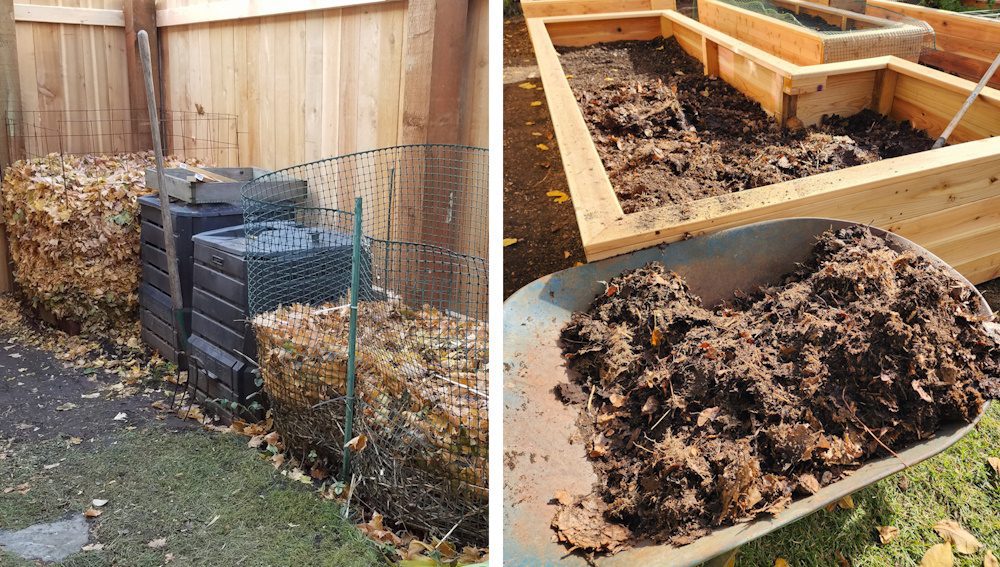
I use leaf mold as mulch, as top dressing around plants, and as an additive to potting soil. Its true strength lies in garden beds, especially when combined with rich compost. This combo improves soil structure and fertility with materials that would otherwise be discarded!

Compost Power – Turning Leaves into Nutrient-Rich Compost
Fallen leaves are also an excellent carbon-rich (brown) ingredient for compost. The key to composting is maintaining a balance between green materials, like grass clippings and kitchen scraps, and brown materials.
I often dip into my leaf bin of shredded leaves to add a layer of brown material to my compost, especially after adding grass clippings. Your compost pile will hum along happily all winter with a few armfuls of fall leaves added to the mix.
Habitat Havens – Leaves as Wildlife Shelter
Part of collecting fallen leaves is to “tidy” the landscape. But I challenge you to leave some of those leaves alone. Let some areas in your landscape go wild—under shrubs or at the garden edge. It might look a bit messy, but trust me, your garden will thank you next year.
Why? Leaves provide an essential winter habitat for beneficial insects, pollinators, and small wildlife, and most will survive the cold season in your garden if you give them a place to nest.

Leaf piles provide insulation and protection for ground-dwelling queen bumblebees, ladybugs, and other beneficial insects that nest in and under leaves. The Western tiger swallowtail butterfly spins a chrysalis that mimics brown fallen leaves among real fallen leaves. If leaves are removed, these insects may not return to your landscape.
Embrace the Leaf Life
Fall might sound like leaf-blower season, but savvy gardeners know better — it’s actually free garden gold season! Those crunchy leaves piling up in your yard aren’t just a nuisance; they’re mulch, compost, soil conditioner, and insect hotel all in one.
This fall, skip the bags and enjoy the abundance. Sit back and feel good knowing that every leaf you save helps next year’s garden. After all, Mother Nature doesn’t waste her leaves — and we shouldn’t either.





Leave a Reply