Here’s a gardening truth – just about everyone grows tomatoes, and why not? Nothing compares to the flavor of a homegrown tomato. But another truth: not everyone grows great tomatoes.
If that’s you and you’ve dealt with leggy plants, poor harvests, bland flavor, or the biggest heartbreak of all at this time of year, early frost (oh yeah, be warned), the following tips will help you level up your tomato-growing game.
I’ve said it numerous times: tomatoes are the dramatic divas of the garden, yet they are predictable once you understand their rules of engagement.

These tips aren’t beginner basics—these are the tweaks that separate “okay” tomatoes from “wowzers.”
Tip #1: Choose the Right Type (Not all tomatoes grow the same)
Tomatoes, like gardeners, come in many sizes, shapes, and colors, and exhibit a range of growth habits. Selecting the right tomato variety for your growing space, gardening goals, and season is the first step toward an epic harvest.
Here’s a quick breakdown:
- Determinant: These tomatoes tend to be compact and set their fruit all at once (usually within a two-week window). Many canning and paste tomatoes are determinate, allowing you to harvest in a short window for easier preservation. They’re also excellent choices for short growing seasons like ours.
- Indeterminate: These are your “vining” tomatoes, which keep growing and producing until fall’s frost kills them. Many beefsteak and cherry tomatoes are indeterminate and often need strong support or trellising. The rewards are high with season-long production, but they require more management.
- Semi-determinate: Offers the best of both worlds—growing larger than determinate bush types but smaller than sprawling indeterminate vines—about 3 to 5 feet tall. They often provide a heavy, concentrated early harvest like determinate types, yet continue to produce fruit throughout the season until frost.
- Dwarf & Micro-dwarf: These plants are extremely compact, growing from 12 to 30 inches tall. Don’t be fooled by the name. Although the plant is small, several varieties produce full-sized fruit. These plants are perfect for tabletop growing, containers, or small-space gardening.

Regardless of the type you choose, select an early-maturing variety (75 days or less) as a harvest insurance policy.
Tip #2: Build the Soil Before You Plant
The most important aspect of growing great tomatoes starts with the soil. Tomatoes are heavy feeders and are not the crop to ‘wing it” in poor soil. They need soil that is rich in organic matter and nutrients to thrive.
The key is to feed your soil—not the plant. Healthy soil sustains soil life, which in turn nourishes your plants. Compost-rich soil offers excellent drainage, aeration, and nutrients. Before planting, amend the soil with a 2- to 3-inch layer of compost.
Remember: weak soil = weak plants, no matter how fancy the variety.
Tip #3: Plant Deep (Yes, Really Deep)
Tomatoes have a superpower when it comes to root growth—they can send out roots all along their main stem.
When planted deeply, the stem develops additional roots (adventitious roots), strengthening the plant. More roots mean more stable, healthier plants with greater nutrient and water absorption.
So, how deep is deep? Whether you are planting in the ground or in a container, plant about two-thirds of the stem in the soil, leaving the remaining one-third above ground.


I know this may feel wrong the first time you do it, but trust me, it’s necessary.
If deep planting isn’t possible, tomatoes can be planted by trenching: lay them on their sides in a 6-inch trench, then cover the roots and the lower two-thirds of the stem with soil. Gently bend the top of the plant upward.
Tip #4: Feed Them Like You Mean It
Tomatoes need consistent nutrition, but as you build your soil, you may need to add supplemental nutrients to achieve a great harvest.
Transplants will benefit from an organic, slow-release, balanced fertilizer that supports root and leaf development. Organic fish emulsion and a top dressing of compost will help your plants get off to a good start.

Once flowering begins, reduce nitrogen (N) and switch to a slow-release, organic fertilizer higher in phosphorus (P) and potassium (K). These elements are essential for good fruit set and development. Excess nitrogen produces large, leafy plants but few tomatoes.
Avoid synthetic quick-fix fertilizers (“miracle” products). They only provide a short-term gain and do nothing for the soil or soil life.
Tip #5: Water Consistently or Prepare for Drama
Tomatoes hate inconsistency more than neglect, and inconsistent watering can lead to issues like blossom end rot, fruit cracking, and stressed plants.


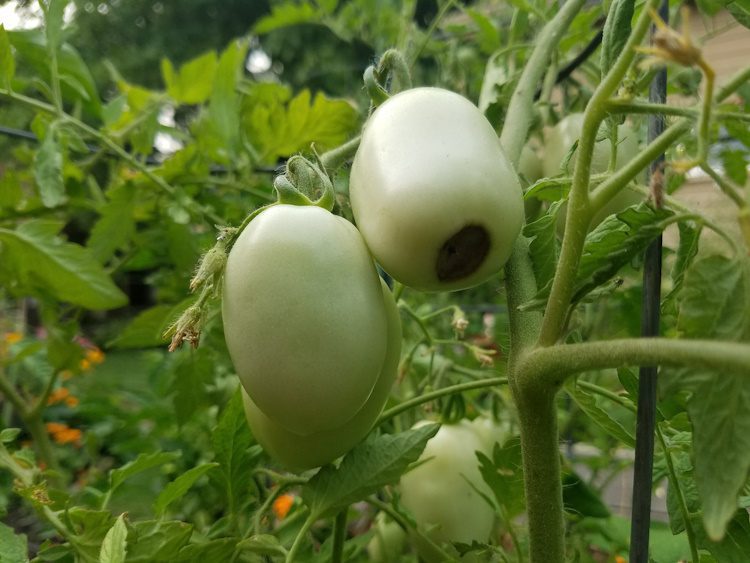
To keep your tomatoes happy and productive, water slowly and deeply at the base of the plant, about 1 to 2 inches each week. Avoid shallow daily sprinkles, which lead to shallow roots and unstable plants, and overhead watering, which encourages disease.
Timing matters, too: watering early in the day lets plants absorb more moisture before the day’s heat sets in. Moisture regulation starts at the soil surface, which brings us directly to tip #6…
Tip #6: Mulch Like a Pro
Mulch is the unsung hero of the garden. No glamour, just results. In our region, mulch is critical for buffering against temperature swings and conserving water.
A two-inch layer of organic mulch around your tomato plants keeps fungal diseases off the leaves while also retaining soil moisture, preventing soil crusting, and suppressing weeds (and that’s reason enough to mulch!).
Shredded leaves, clean straw, herbicide-free grass clippings, and compost are all excellent mulch materials.
Tip #7: Prune Smart
Pruning stirs strong emotions among tomato gardeners. Some favor severe pruning with the single- or double-stem growing method, while others barely make a snip. Regardless of your pruning style, there are a few pruning must-dos to keep your plants healthy and disease-free.
Know your tomato type:
- Indeterminate varieties get the green light for pruning.
- Semi-determinate, determinate, and dwarf types receive a yellow light – some pruning is necessary, but use caution. Too much pruning reduces fruit yields.
What to prune:
- Lower leaves.Regardless of the tomato variety, leaves touching the soil should be removed. Tomatoes are highly susceptible to soil-borne fungal diseases, such as early blight. Fungal spores can easily be splashed from the soil onto the plant’s leaves. Allow 6 to 12 inches of space between the soil and the first set of leaves (depending on the variety).
- Suckers. For indeterminate varieties, remove selected suckers to improve airflow and reduce disease risk. This can also make harvesting and plant management easier.

Personally, I allow suckers to grow early in the season so that as many fruits as possible can develop. As the season progresses, I remove them to improve airflow.
Don’t overcomplicate it. Just keep the leaves away from the soil and allow some airflow through the plant.
Grow Like a Pro
Growing great tomatoes isn’t a matter of luck—it’s the result of a few key decisions made well. These tips will help you on your way, but I also encourage you to experiment with different tomato varieties and tweak methods to suit your situation (except bottom pruning—that’s a must-do!).
With our short growing season, you need to stack the odds in your favor. Every small decision adds up. Start with strong plants, strong soil, and a solid plan—and you’re already ahead of most gardeners.





Leave a Reply